Kdo si vzal Bianca Maria Sforza?
Philibert I, Duke of Savoy ženatý Bianca Maria Sforza v roce . Věkový rozdíl byl 6 roky, 7 měsíců a 29 dny.
Manželství skončilo v roce .
Maxmilián I. Habsburský ženatý Bianca Maria Sforza dne . Bianca Maria Sforza bylo v den svatby 21 let (21 roky, 7 měsíců a 25 dny). Maxmilián I. Habsburský bylo v den svatby 34 let (34 roky, 8 měsíců a 9 dny). Věkový rozdíl byl 13 roky, 0 měsíců a 14 dny.
Manželství trvalo 17 roky, 1 měsíců a 1 dny (6240 dní). Manželství skončilo .
Maxmilián I. Habsburský ženatý Bianca Maria Sforza v roce . Věkový rozdíl byl 13 roky, 0 měsíců a 14 dny.
Manželství skončilo .
Bianca Maria Sforza: Časová osa stavu manželství
1 Pixel = 1 Month

Bianca Maria Sforza
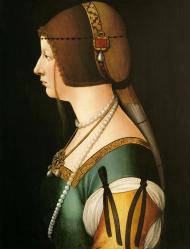
Bianca Maria Sforza (5 April 1472 – 31 December 1510) was Queen of Germany and Empress of the Holy Roman Empire as the third spouse of Maximilian I. She was the eldest legitimate daughter of Duke Galeazzo Maria Sforza of Milan by his second wife, Bona of Savoy.
Přečtěte si více...
Philibert I, Duke of Savoy
Philibert Ier, dit le Chasseur, né le Chambéry en et mort à Lyon le , est le 4e duc de Savoie, prince de Piémont, comte d'Aoste, de Genève et de Romont, baron de Faucigny, de Gex et de Vaud, Grand-Maître de l'Ordre de l'Annonciade, de 1472 à 1482.
Přečtěte si více...Bianca Maria Sforza
Maxmilián I. Habsburský
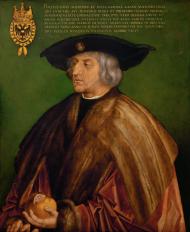
Maximilian I (22 March 1459 – 12 January 1519) was King of the Romans from 1486 and Holy Roman Emperor from 1508 until his death in 1519. He was never crowned by the Pope, as the journey to Rome was blocked by the Venetians. He proclaimed himself elected emperor in 1508 at Trent, with Pope Julius II later recognizing it. This broke the tradition of requiring a papal coronation for the adoption of the Imperial title. Maximilian was the only surviving son of Frederick III, Holy Roman Emperor, and Eleanor of Portugal. From his coronation as King of the Romans in 1486, he ran a double government, or Doppelregierung with his father until Frederick's death in 1493.
Maximilian expanded the influence of the House of Habsburg through war and his marriage in 1477 to Mary, Duchess of Burgundy. However, he also lost his family's lands in Switzerland to the Swiss Confederacy. Through the marriage of his son Philip the Handsome to eventual queen Joanna of Castile in 1496, Maximilian helped to establish the Habsburg dynasty in Spain, which allowed his grandson Charles to hold the thrones of both Castile and Aragon. Historian Thomas A. Brady Jr. describes him as "the first Holy Roman Emperor in 250 years who ruled as well as reigned" and the "ablest royal warlord of his generation".
Nicknamed "Coeur d'acier" ("Heart of steel") by Olivier de la Marche and later historians (either as praise for his courage and soldierly qualities or reproach for his ruthlessness as a warlike ruler), Maximilian has entered the public consciousness, at least in the German-speaking world, as "the last knight" (der letzte Ritter), especially since the eponymous poem by Anastasius Grün was published (although the nickname likely existed even in Maximilian's lifetime). Scholarly debates still discuss whether he was truly the last knight (either as an idealized medieval ruler leading people on horseback, or a Don Quixote-type dreamer and misadventurer), or the first Renaissance prince—an amoral Machiavellian politician who carried his family "to the European pinnacle of dynastic power" largely on the back of loans.
Historians of the late nineteenth century like Leopold von Ranke often criticized Maximilian for putting the interest of his dynasty above that of Germany, hampering the nation's unification process. Since Hermann Wiesflecker's Kaiser Maximilian I. Das Reich, Österreich und Europa an der Wende zur Neuzeit (1971–1986) became the standard work, a more positive image of the emperor has emerged. He is seen as a modern, innovative ruler who carried out important reforms and promoted significant cultural achievements, even if the financial costs weighed down the Austrians and his military expansion and caused the deaths and sufferings of many people.
Through an "unprecedented" image-building program, with the help of many notable scholars and artists, in his lifetime, the emperor—"the promoter, coordinator, and prime mover, an artistic impresario and entrepreneur with seemingly limitless energy and enthusiasm and an unfailing eye for detail"—had built for himself "a virtual royal self" of a quality that historians call "unmatched" or "hitherto unimagined". To this image, new layers have been added by the works of later artists in the centuries following his death, both as continuation of deliberately crafted images developed by his program as well as development of spontaneous sources and exploration of actual historical events, creating what Elaine Tennant dubs the "Maximilian industry".
Přečtěte si více...Místo svatby
Bianca Maria Sforza
Maxmilián I. Habsburský
Maximilian I (22 March 1459 – 12 January 1519) was King of the Romans from 1486 and Holy Roman Emperor from 1508 until his death in 1519. He was never crowned by the Pope, as the journey to Rome was blocked by the Venetians. He proclaimed himself elected emperor in 1508 at Trent, with Pope Julius II later recognizing it. This broke the tradition of requiring a papal coronation for the adoption of the Imperial title. Maximilian was the only surviving son of Frederick III, Holy Roman Emperor, and Eleanor of Portugal. From his coronation as King of the Romans in 1486, he ran a double government, or Doppelregierung with his father until Frederick's death in 1493.
Maximilian expanded the influence of the House of Habsburg through war and his marriage in 1477 to Mary, Duchess of Burgundy. However, he also lost his family's lands in Switzerland to the Swiss Confederacy. Through the marriage of his son Philip the Handsome to eventual queen Joanna of Castile in 1496, Maximilian helped to establish the Habsburg dynasty in Spain, which allowed his grandson Charles to hold the thrones of both Castile and Aragon. Historian Thomas A. Brady Jr. describes him as "the first Holy Roman Emperor in 250 years who ruled as well as reigned" and the "ablest royal warlord of his generation".
Nicknamed "Coeur d'acier" ("Heart of steel") by Olivier de la Marche and later historians (either as praise for his courage and soldierly qualities or reproach for his ruthlessness as a warlike ruler), Maximilian has entered the public consciousness, at least in the German-speaking world, as "the last knight" (der letzte Ritter), especially since the eponymous poem by Anastasius Grün was published (although the nickname likely existed even in Maximilian's lifetime). Scholarly debates still discuss whether he was truly the last knight (either as an idealized medieval ruler leading people on horseback, or a Don Quixote-type dreamer and misadventurer), or the first Renaissance prince—an amoral Machiavellian politician who carried his family "to the European pinnacle of dynastic power" largely on the back of loans.
Historians of the late nineteenth century like Leopold von Ranke often criticized Maximilian for putting the interest of his dynasty above that of Germany, hampering the nation's unification process. Since Hermann Wiesflecker's Kaiser Maximilian I. Das Reich, Österreich und Europa an der Wende zur Neuzeit (1971–1986) became the standard work, a more positive image of the emperor has emerged. He is seen as a modern, innovative ruler who carried out important reforms and promoted significant cultural achievements, even if the financial costs weighed down the Austrians and his military expansion and caused the deaths and sufferings of many people.
Through an "unprecedented" image-building program, with the help of many notable scholars and artists, in his lifetime, the emperor—"the promoter, coordinator, and prime mover, an artistic impresario and entrepreneur with seemingly limitless energy and enthusiasm and an unfailing eye for detail"—had built for himself "a virtual royal self" of a quality that historians call "unmatched" or "hitherto unimagined". To this image, new layers have been added by the works of later artists in the centuries following his death, both as continuation of deliberately crafted images developed by his program as well as development of spontaneous sources and exploration of actual historical events, creating what Elaine Tennant dubs the "Maximilian industry".
Přečtěte si více...