Kdo si vzal Benedikta Jindřiška Falcko-Simmernská?
John Frederick, Duke of Brunswick-Lüneburg ženatý Benedikta Jindřiška Falcko-Simmernská dne . Benedicta Henrietta of the Palatinate bylo v den svatby 16 let (16 roky, 8 měsíců a 16 dny). John Frederick, Duke of Brunswick-Lüneburg bylo v den svatby 43 let (43 roky, 7 měsíců a 5 dny). Věkový rozdíl byl 26 roky, 10 měsíců a 18 dny.
Benedikta Jindřiška Falcko-Simmernská: Časová osa stavu manželství
1 Pixel = 1 Month

Benedikta Jindřiška Falcko-Simmernská
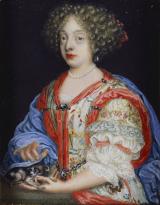
Benedikta Jindřiška Falcko-Simmernská (Benedikta Henrietta Filipina; 14. března 1652, Paříž – 12. srpna 1730, Asnières-sur-Seine) byla německá princezna, třetí a nejmladší dcera Eduarda Falckého a jeho francouzské manželky Anny Gonzagy. Benedikta se sňatkem s Janem Fridrichem Brunšvicko-Lüneburským stala brunšvicko-lüneburskou vévodkyní. Byla předkem Ludvíka XVI. a Ludvíka Filipa II. Orleánského, stejně jako několika evropských panovníků 21. století.
Přečtěte si více...
John Frederick, Duke of Brunswick-Lüneburg

John Frederick (German: Johann Friedrich; 25 April 1625 in Herzberg am Harz – 18 December 1679 in Augsburg) was duke of Brunswick-Lüneburg. He ruled over the Principality of Calenberg, a subdivision of the duchy, from 1665 until his death.
The third son of George, Duke of Brunswick-Lüneburg, John converted to the Roman Catholic Church, the only member of his family to do so, in 1651, as a result of a visit while in Italy to Saint Joseph of Cupertino. He received Calenberg when his elder brother George William inherited the Principality of Lüneburg. In 1666, he had a palace built in Herrenhausen near Hanover that was inspired by the Palace of Versailles and is famous for its gardens, the Herrenhausen Gardens.
In 1667, he employed as his master builder the Venetian architect Girolamo Sartorio, who designed many buildings in the town, including the Neustädter Kirche, and was instrumental in the expansion of the Herrenhausen Gardens.
In 1676, John Frederick employed Gottfried Wilhelm Leibniz as Privy Councillor and librarian of the important ducal library. Thus began Leibniz's 40-year association with the House of Hanover, which resulted in three generations of Hanovers being patrons to one of the most eminent philosophers and mathematicians of Europe.
Přečtěte si více...