Kdo si vzal Qianlong?
Noble Lady Shun ženatý Qianlong .
Imperial Concubine Xun ženatý Qianlong .
Empress Xiaoxianchun ženatý Qianlong . Věkový rozdíl byl 0 roky, 6 měsíců a 3 dny.
Empress Nara ženatý Qianlong . Věkový rozdíl byl 6 roky, 5 měsíců a 14 dny.
Noble Consort Xun ženatý Qianlong . Věkový rozdíl byl 47 roky, 1 měsíců a 4 dny.
Consort Shu, of the Yehe Nala clan ženatý Qianlong .
Dung phi ženatý Qianlong . Věkový rozdíl byl 23 roky, 0 měsíců a 16 dny.
Imperial Concubine Gong ženatý Qianlong .
Consort Yu ženatý Qianlong .
Imperial Noble Consort Zhemin ženatý Qianlong .
Imperial Concubine Yi from the Huang clan ženatý Qianlong .
Imperial Noble Consort Qinggong ženatý Qianlong .
Dowager Noble Consort Wan ženatý Qianlong .
Imperial Concubine Cheng ženatý Qianlong .
Noble Consort Ying ženatý Qianlong .
Imperial Noble Consort Shujia ženatý Qianlong .
Siao-i-čchun ženatý Qianlong . Věkový rozdíl byl 16 roky, 0 měsíců a 28 dny.
Fragrant Concubine ženatý Qianlong .
Noble Consort Yu ženatý Qianlong . Věkový rozdíl byl 2 roky, 8 měsíců a 21 dny.
Consort Fang ženatý Qianlong .
Consort Jin ženatý Qianlong .
Imperial Concubine Yi from the Bo clan ženatý Qianlong .
Imperial Noble Consort Huixian ženatý Qianlong .
Imperial Noble Consort Chunhui ženatý Qianlong .
Consort Dun ženatý Qianlong .
Imperial Concubine Shen ženatý Qianlong .
Noble Consort Xin ženatý Qianlong .
Noble Lady Rui ženatý Qianlong .
Qianlong

Qianlong, Kien-long, K'ien-long ou Khian-loung (chinois : 乾隆 ; pinyin : Qiánlóng ; Mandchou : ᡥᡠᠩ ᠯᡳ, nom personnel Aixinjuelo Hongli) ( - ) est le sixième empereur de la dynastie Qing. Il règne officiellement sur la Chine du au . Son nom de naissance est Àixīnjuéluó Hónglì (愛新覺羅弘曆), aussi nommé « Prince Bǎo » (宝亲王 / 寶親王, bǎo qīnwáng) ; son nom de temple est Gāozōng (高宗) et son titre posthume Chúndì (. 帝). Qianlong est le fils de l'empereur Yongzheng (雍正帝) et de la concubine impériale Xiao Sheng Xian (孝聖憲).
Le règne de l'empereur Qianlong est considéré comme l'un des âges d'or de la civilisation chinoise, l'apogée de la dynastie Qing. L'empereur, homme d'État ambitieux et conscient de son devoir, élargit les frontières de l'empire chinois en direction de l'Asie centrale. Poète, peintre accompli et maître de la calligraphie, il promeut le développement de la culture chinoise dans tout l'empire. Collectionneur averti, il rassemble une des plus importantes collections d'art au monde. Il fonde la bibliothèque des quatre trésors, Siku Quanshu, afin d'établir la plus grande collection de livres de toute l’Histoire de la Chine. C'est pour la Chine une période faste d'expansion territoriale et de stabilité intérieure. Cependant, à la fin de son règne, les premiers signes de faiblesse de la dynastie Qing apparaissent.
Přečtěte si více...
Noble Lady Shun

Qianlong
Imperial Concubine Xun
Qianlong
Empress Xiaoxianchun

Empress Xiaoxianchun (28 March 1712 – 8 April 1748), of the Manchu Bordered Yellow Banner Fuca clan, was an imperial consort of the Qing dynasty. She was the first wife of the Qianlong Emperor.
Přečtěte si více...Qianlong
Empress Nara

The Empress of the Nara clan (11 March 1718 – 19 August 1766), of the Manchu Bordered Blue Banner Nara clan, was an imperial consort of the Qing dynasty. She was second wife of the Qianlong Emperor. Informally known as the Step-Empress, she is one of the most controversial female figures in Chinese history.
She was elevated to empress rank after Empress Xiaoxianchun's death, and in her role as empress, accompanied the Qianlong Emperor on many leisure and hunting trips, as well as ancestral worship ceremonies.
Historical records give little information about her life or even her physical appearance. Because of this lack of documentation, there has been intense speculation among Chinese academicians regarding her historicity and character. It is widely suspected that the Qianlong Emperor destroyed all her records and portraits.
Although never officially deposed, she lost her authority as chief of the imperial harem in 1765, reputedly because she cut her hair, an act that was considered a grave offense according to Manchurian custom. Consequently, the Qianlong Emperor ordered that her four titular imperial edicts, accompanying gifts, and imperial seal be confiscated. After her death, she was not given an imperial funeral or a posthumous name, nor was she buried with the Qianlong Emperor.
Přečtěte si více...Qianlong
Noble Consort Xun

Consort Xun may refer to:
- Noble Consort Xun (Qianlong) (1758–1798), concubine of the Qianlong Emperor
- Noble Consort Xun (Tongzhi) (1857–1921), concubine of the Tongzhi Emperor
Qianlong
Consort Shu, of the Yehe Nala clan
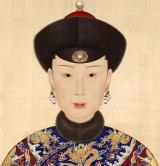
Consort Shu may refer to:
- Consort Shu (Qianlong) (1728–1777), concubine of the Qianlong Emperor
- Consort Shu (Jiaqiang) (died 1792), concubine of the Jiaqing Emperor
- Wenxiu (1909–1953), consort of Puyi
Qianlong
Dung phi

Qianlong
Imperial Concubine Gong
Qianlong
Consort Yu
Qianlong
Imperial Noble Consort Zhemin
Imperial Noble Consort Zhemin (died 20 August 1735), of the Manchu Plain Yellow Banner Fuca clan, was a consort of the Qianlong Emperor.
Přečtěte si více...Qianlong
Imperial Concubine Yi from the Huang clan
Qianlong
Imperial Noble Consort Qinggong

Qianlong
Dowager Noble Consort Wan

Noble Consort Wan (1 February 1716 – 10 March 1807), of the Han Chinese Chen clan, was a consort of the Qianlong Emperor. She was five years his junior.
Přečtěte si více...Qianlong
Imperial Concubine Cheng
Qianlong
Noble Consort Ying

Qianlong
Imperial Noble Consort Shujia

Imperial Noble Consort Shujia (14 September 1713 – 17 December 1755), of the Korean Gingiya clan which was placed into the Manchu Bordered Yellow Banner after her death, was a consort of the Qianlong Emperor. She was two years his junior. Imperial Noble Consort Shujia was also the Qing dynasty's only imperial concubine of ethnic Korean heritage.
Přečtěte si více...Qianlong
Siao-i-čchun

Empress Xiaoyichun (23 October 1727 – 28 February 1775), of the Manchu Bordered Yellow Banner Weigiya clan, was an imperial consort of the Qing dynasty. She was one of the most favored consorts of the Qianlong Emperor, with whom she conceived seven children.
Přečtěte si více...Qianlong
Fragrant Concubine

The Fragrant Concubine (Chinese: 香妃; pinyin: Xiāng Fēi; Wade–Giles: Hsiang Fei; Uyghur: ئىپارخان / Iparxan / Ипархан) is a figure in Chinese legend who was taken as a consort by the Qianlong Emperor of the Qing dynasty in the 18th century. Although the stories about her are believed to be mythical, they may have been based on an actual concubine from western China who entered the imperial harem in 1760 and received the title "Imperial Consort Rong" (容妃; Róng Fēi). Qing Dynasty and Uyghur tellings of the legend of the Fragrant Concubine diverge greatly and her experience represents a powerful symbol for both cultures. The story became very popular during the early 20th century and has since been adapted into several plays, films and books.
Přečtěte si více...
Qianlong
Consort Fang
Qianlong
Consort Jin
Qianlong
Imperial Concubine Yi from the Bo clan
Qianlong
Imperial Noble Consort Huixian

Imperial Noble Consort Huixian (1711 – 25 February 1745) of the Manchu Bordered Yellow Banner Gaogiya clan, was a consort of the Qianlong Emperor.
Přečtěte si více...Qianlong
Imperial Noble Consort Chunhui

Imperial Noble Consort Chunhui (13 June 1713 – 2 June 1760), of the Han Chinese Plain White Banner Su clan, was a consort of the Qianlong Emperor. She was two years his junior.
Přečtěte si více...Qianlong
Consort Dun

Consort Dun (27 March 1746 – 6 March 1806), of the Manchu Plain White Banner Wang clan, was a consort of the Qianlong Emperor. She was 35 years his junior.
Přečtěte si více...Qianlong
Imperial Concubine Shen
Qianlong
Noble Consort Xin

Noble Consort Xin (26 June 1737 – 28 May 1764), of the Manchu Bordered Yellow Banner Daigiya clan, was a consort of the Qianlong Emperor. She was 26 years his junior.
Přečtěte si více...Qianlong